
Clarifying the Meaning of the Patriarch’s Statement
At first sight, the language used by Patriarch Constantius seems to have only one possible meaning. It appears to say clearly that the ancient...

Note on the Location of the Ancient Harbour Wall Discovered in 1819
The discovery of an ancient harbour wall in the year 1819 is an important event in the study of Constantinople’s maritime history. Our knowledge...
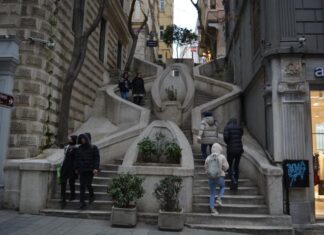
The Gate of Saint Demetrius and Its Names
Different Names of the Gate
The gate was guarded on its north-western side by the Church of Saint Demetrius, who was regarded as a great...

The Dangers Faced by the Sea Walls
The Threat of the Open Sea
The greatest danger faced by the walls along the Sea of Marmara did not come from armies or siege...
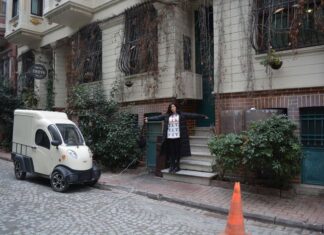
The Meaning of the Word “Stadium” in Medieval Writing
An Unclear Unit of Measurement
The difficulty of understanding Leonard of Scio’s measurements becomes even clearer when we consider how medieval writers used the word...
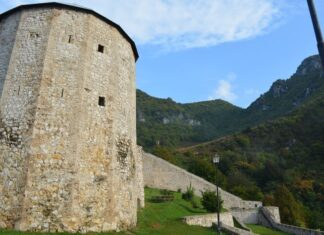
Gate of Ayasma Kapoussi
The next gate along the harbour walls is known today as Ayasma Kapoussi. Historical evidence suggests that this entrance was opened after the Turkish...

Three Successive Gates
The next three gates along the Harbour Walls of Constantinople are known today as Odun Kapan Kapoussi, Zindan Kapoussi, and Balouk Bazaar Kapoussi. In...
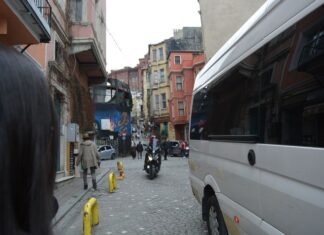
Walls Along the Golden Horn
The Porta Platea and Its Identification
The next gate mentioned by Pusculus and Dolfin is the Porta Platea, also called the Porta alla Piazza. This...
Identifying the Gate of Melantiados
There is good reason to believe that the gate known as Porta Melantiados (Πόρτα Μελαντιάδος) or Pyle Melandesia (Πύλη Μελανδεσίας) is the same as...
Gate of Selivria
The Gate of Selivria (Selivri Kapısı) and Its Historical Importance
The next major public gate in the Theodosian Walls is known today as Selivri Kapısı....